
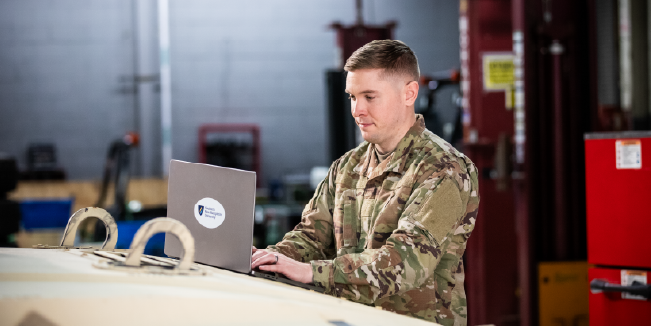
On Veterans Day, we honor the service and sacrifices of our nation’s veterans. We also recognize the importance of supporting the success of our nation’s veterans beyond military service. For many military-connected learners, higher education represents an opportunity for career advancement, financial stability, and personal growth. Yet, too often navigating higher education systems requires military-connected learners to overcome significant barriers, such as relocation, deployment, health challenges, funding complexities, barriers to transferring military credit, and translating military experience into civilian careers.
The Center for Higher Education Policy and Practice (CHEPP)’s newest fact sheet, Supporting Military-Connected Learners in Higher Education, outlines the barriers military-connected learners face, and surfaces the strategies higher education leaders and practitioners can use to address them, along with the federal policy changes needed to better support this population.
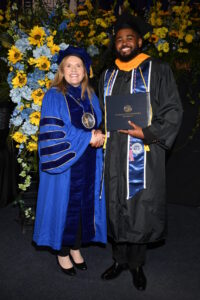
Learners like Marine veteran and father of three, Nate Dillard, spent years working to access military education benefits. Once he became eligible for military education benefits in 2023, he was able to complete his education. Nate graduated from Southern New Hampshire University (SNHU) in the Spring of 2026 with his business degree. SNHU’s online program allowed him to be a present dad, continue to work, and complete his studies. He shared, “I didn’t feel overwhelmed by the workflow… I could still change diapers, be a dad, take my kids to the park.”
While veterans represent a large portion of military-connected learners, other learners included in this population are active-duty servicemembers, National Guard members, military spouses, and Gold Star families. Throughout their studies, military-connected learners may be impacted by deployments, relocations, professional training, family responsibilities, and navigating complicated education benefits.

Vicki Cortez, a military spouse, mother of five, and grandmother of five, completed her degree after nearly three decades. After leaving college just nine credits short of graduation, she returned to SNHU, where nearly all her previous credits transferred. With education benefits earned through her husband’s military service, Vicki was able to finish what she started 30 years earlier. Her experience demonstrates how flexible credit transfer policies can help returning learners build on their previous accomplishments rather than start over.
This Veterans Day, the stories of Vicki and Nate remind us that honoring military service also means investing in what comes next. By removing barriers and recognizing the experiences military-connected learners bring to higher education, institutions can help ensure their service, skills, and determination translate into lasting educational and career success.
Read CHEPP’s fact sheet for more about what higher education leaders and policymakers can do to better support military-connected learners.