
Don’t miss the latest from CHEPP. Sign up for our quarterly newsletter here.
The beginning of an academic year isn’t just a fresh start—it’s a call to action. Today’s learners need more than lectures; they need programs that lead to real skills and good jobs. Higher education opens doors to meaningful careers, but only when students can see the path forward. Institutions across the country are leading the way with career-focused programs and services for adult, working, and online learners. They offer a model for all of us.
In this edition of CHEPP Takes, we’re featuring our new paper on career connectivity in higher education: Online by Design: Improving Career Connection for Today’s Learners.
In the paper, we make the case that career outcomes must be at the heart of higher education’s value proposition. We also share the practical solutions—like paid internships, career advising, competency-based education, and credit for prior learning—that institutions and policymakers can use to help more students gain real-world skills and good jobs.
As short-term credentials that align with workforce needs become more common, institutions and policymakers must ensure these offerings help learners find near-term success in the job market, while also paving the way for future degrees and long-term careers. To make this possible, these credentials should act as building blocks—designed to stack over time, offer credit towards a degree, and transfer easily to new programs or career paths.
The paper also spotlights student stories from Southern New Hampshire University and case studies from our partners at Calbright College, the College of Health Care Professions, Gateway U, and other leaders in innovative, career-connected design. These institutions show us what it looks like to meet students where they are—whether that’s online, on campus, or in the workplace—and help them translate their education into meaningful, higher-paid employment.
By strengthening career pathways, we’re also able to better serve the unique needs of military learners, veterans, and their families. These learners bring leadership, resilience, and life experience to our schools and workplaces, and they deserve an education that recognizes and builds on their strengths.
A new, bipartisan bill called the Military Learning for Credit Act is a promising step forward. The bill would allow veterans to use their education benefits to cover the cost of assessments and examinations that turn military experience into college credit. This kind of policy makes it easier for service members to earn credentials and transition into meaningful civilian careers.
As Veterans Day approaches, we’ll be releasing more resources about how higher education can help servicemembers and veterans make the transition to civilian life. Stay tuned for more information, coming soon!
Thank you for being part of this important work. Read on for more about our latest paper, policy updates, and stories from SNHU learners and partners.
Best,
Executive Director,
Center for Higher Education Policy and Practice
Research in Focus: Career Connectivity

A survey from New America found that almost 90% of prospective students go to college because they want better jobs and higher pay. Higher education is a proven pathway to these careers, but not all learners have access to critical career services. Working adults, parents, and online learners often miss out on opportunities for career advising and paid internships that can help them secure jobs after graduation.
CHEPP’s latest report, Online by Design: Improving Career Connection Opportunities for Today’s Learners, outlines a bold vision to make higher education more flexible and workforce-aligned. By making these changes, we can help millions of students build better futures and strengthen the American economy.
Policy Watch
Budget Reconciliation Bill Implementation
Following the passage of the Budget Reconciliation Bill in July, CHEPP is monitoring the bill’s implementation. The bill made big changes to federal higher education policy that will impact how students choose colleges and how they pay for them. It limits student loan borrowing, simplifies student loan repayment, expands Pell Grant eligibility for short-term training programs, and adopts new accountability measures.
Student Loans: In May, Southern New Hampshire University (SNHU) submitted comments to the U.S. Department of Education to inform proposed rulemaking on student loan repayment. The letter emphasizes SNHU’s experience providing hands-on support getting borrowers into active student loan repayment and highlights a key issue: many borrowers want to repay their loans, but become discouraged when interest capitalization causes their loans to keep growing.
The letter reads, “Borrowers need affordable options with attainable repayment terms, and access to trained personnel to provide hands-on support.”
CHEPP stands by these comments and urges the Department to implement changes to student loan repayment options with a singular focus—student success and financial well-being.
Workforce Pell: When done right, expanding access to the Pell Grant for short-term credential programs presents new opportunities for learners.
In the rulemaking process, the Department of Education should ensure that Pell Grant-eligible microcredentials are both stackable and transferable to two and four-year degree programs, so they can support learners’ short-term economic success and act as on-ramps for degree completion and long-term career opportunities.
The Federal Budget and Appropriations
CHEPP is closely watching to see if Congress will pass a continuing resolution to avoid a government shutdown before September 30 when current federal funding runs out. Government shutdowns impact higher education in a number of ways, including creating uncertainty among learners about whether they will be able to access their student aid, and delays and stoppage of U.S. Department of Education services and programs. These impacts become more significant the longer a shutdown lasts. The House has passed a continuing resolution that would fund the government for seven weeks. This short-term funding bill currently does not have enough bipartisan support in the Senate to pass, and negotiations are ongoing.
Alongside overall funding, Congress continues to work through the regular appropriations process to fund the government for the fiscal year 2026– including for education programs. CHEPP is encouraged by the Senate Appropriations Committee passed bill maintaining current education funding levels, as well as the House Appropriations Committee passed bill maintaining the current maximum Pell Grant. That being said, the House bill cuts overall education funding by $12 billion—a 15 percent reduction in current funding levels, including cuts to the Federal Work Study program and eliminating Supplemental Educational Opportunity Grants (SEOG). Negotiations will be needed between both parties in the Senate and House to determine what final education funding levels will be.
SNHU Learner Story: From Runway to Graduation Day
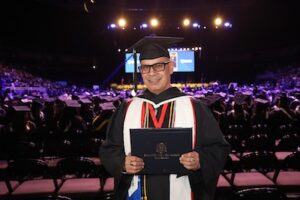
Today’s learners lead busy lives, and they need degree programs that can keep up with them. Still, few students do more jetsetting than SNHU graduate Jeff Mendez, a flight attendant who has been with his airline for 20 years. Jeff wanted a program that he could complete from the skies. Whether he was studying at 30,000 feet or completing assignments during long layovers, he was determined to complete his degree. This year, Jeff graduated from SNHU with an associate’s degree in liberal arts. With flexible programs and competency-based projects that fit into their lives, learners like Jeff can earn their degrees and thrive in the workforce.
Read more about Jeff in CHEPP’s latest paper on career connectivity.
Read, Watch, Listen
 Read
Read
Inside Higher Ed and AARP: Generation Now: Postsecondary Pathways for Older Learners
Thorough reporting from IHE and AARP on the growing barriers older learners face in higher education—featuring insights from SNHU President Lisa Marsh Ryerson.
The New York Times: The Typical American College Student Is Not Who You Think
The NYT highlights the new reality of how today’s learners live—they work jobs while studying, live off-campus, and often juggle family responsibilities—emphasizing the need for education policy to reflect the needs of this diverse and underrepresented majority.
 Watch
Watch
Deaf President Now (Stream on Apple TV+ or Amazon)
A documentary chronicling the powerful 1988 student-led protest at Gallaudet University, where four students sparked a historic civil rights movement demanding a Deaf president—reshaping the future of Deaf leadership and representation in higher education.
 Listen
NPR Morning Edition: Online College Enrollment
Research shows that online higher education is quickly outpacing in-person enrollment. Here, NPR reviews the state of online higher ed, and what institutions are doing to keep up with the demand.
In Partnership: Duet
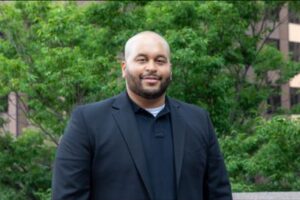
Over 40 million Americans have some college but no credential, limiting their future career prospects. Duet and Southern New Hampshire University are working to change that—supporting working adults with close advising, flexible pacing, and a competency-based online program that works around their busy schedules.
Elijah, a civil servant from Boston, enrolled in a degree program through Duet and SNHU to further his current role at the Boston Mayor’s Office of Black Male Advancement. Elijah credits the flexible schedule and support from coaches for helping him to excel in his courses. He earned his associate degree in October 2024, followed by his bachelor’s degree in February 2025.
Read about how Duet and SNHU are helping learners like Elijah thrive.
On The Road with CHEPP
- CBExchange 2025: CHEPP will attend CBEN’s annual conference from November 10-13 in Phoenix, Arizona.
- CAEL Annual Conference: CHEPP will present “Designing College for Real Life: A Learner-Centered Approach” with CAEL on November 13 at 10 a.m.