
Don’t miss the latest from CHEPP. Sign up for our quarterly newsletter here.
Higher education has the power to transform lives when it meets learners where they are and empowers them to reach their full potential.
I’ve spent the past few months in conversations with practitioners, policymakers, and partners, all wrestling with the same question: How do we build systems that actually work for today’s learners?
In Washington, D.C., I attended meetings with the National Association of Independent Colleges and Universities and the American Council on Education, where I serve on both boards. These gatherings bring together leaders from private institutions, community colleges, large universities, and everything in between for essential conversations about how we help learners access and succeed in higher education. During my visits, I also met with New Hampshire policymakers and U.S. Department of Education officials to ensure the realities our learners face are understood and reflected in policy.
In Dallas, Texas, I joined our CHEPP team, our partners at The College of Health Care Professions (CHCP) and Trellis Strategies, and higher education, workforce, and policy leaders for a tour of CHCP and a roundtable discussion. The conversation centered on improving credit transfer, expanding stackable and short-term credentials, and aligning education with workforce needs amid growing policy momentum both at the federal and state levels. Much of the focus was on the support needs of adult learners.
What stood out to me throughout these conversations is how essential it is that, as we scale, we remain focused on the individual learner. Each learner brings their own goals, challenges, and strengths. Our systems must be designed to reflect that.
I feel lucky to work at SNHU, with learners who come to us with such rich assets and talent, and to be able to help them as they transform their lives.
Workforce pathways are critical, but they’re just one piece of a larger puzzle. What about the learner with a disability who can’t access course materials? The working parent trying to find time to complete their studies? The learner trying to navigate AI tools that could accelerate their learning? The student sleeping in their car while pursuing a degree?
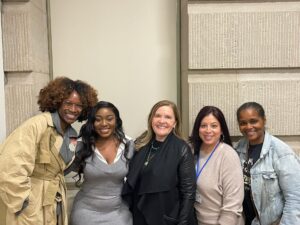
SNHU’s CHEPP is on a mission to center today’s learners in the future of higher education, especially learners with disabilities, working adults, and those struggling to meet basic needs. In February, we published a new fact sheet: Basic Needs Gaps Increase the Risk of College Stop Outs. In March, we joined Today’s Student Coalition for the DC Student Summit. Learners from SNHU and other institutions spoke to policymakers about how federal policies shape the daily realities of learners’ lives. While the students were in Washington, D.C., I had the great pleasure of spending time with them and hearing directly about their experiences.
This spring, the Coalition on Accessibility in Higher Education, which was co-founded by CHEPP last year, will publish an accessibility playbook for institutions and policymakers, SNHU will celebrate our Spring Commencement ceremonies, and so much more.
I feel hopeful as I think about the months ahead. Not because the challenges have disappeared, but because of the work that is happening. At SNHU, through CHEPP, and alongside partners and learners across the country, higher education systems are being reimagined and rebuilt with learners at the center.
When higher education does its job well, it does much more than grant degrees. It helps people get better jobs, boosts the economy, and makes the country stronger. That’s what our work is about, and that’s why it matters.
Thank you for your leadership and partnership in this vital work.
With gratitude,
President
Southern New Hampshire University
Research in Action
Learners across the country are facing rising costs for essentials like food, housing, healthcare, and transportation. Even as they work hard to stay in school and build a better future, many are forced to make the difficult choice between paying for their education and covering their basic needs.
Our fact sheet, Basic Needs Gaps Increase the Risk of College Stop Outs, examines this growing affordability crisis and offers clear, actionable recommendations for policymakers to solve it. Together, we can make sure every learner has the stability they need to stay enrolled and succeed.
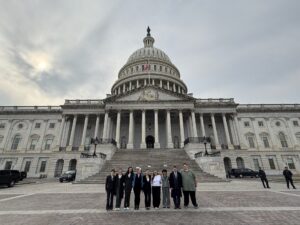
This spring, CHEPP also hosted students from SNHU’s Manchester, NH campus. While most students headed home or to the beach for spring break, SNHU learners went to Capitol Hill to advocate for federal policies that support today’s learners.
“It was a great experience,” said Peter, an SNHU learner from Vermont. “We were able to discuss some critical topics that are near and dear to my heart as far as my experience with food insecurity. And we got to advocate for the expansion of SNAP for college students.”
Learners met with nine members of Congress, including U.S. Representative Maggie Goodlander from New Hampshire, to learn about the policies expanding basic needs supports for college students.
Policy Watch
Congress is currently in a two-week recess. First on their agenda when back in session will be resolving the dragging government shutdown of the Department of Homeland Security (DHS), Congress is also well into the Fiscal Year 2027 appropriations process. CHEPP will be monitoring this closely, and at the top of our list is how Congress will address the Pell Grant shortfall.
In February, the Congressional Budget Office (CBO) released a new projection for the Pell Grant, estimating a nearly $17 billion funding shortfall during the current and 2027 fiscal years. This comes on the heels of Congress passing additional funding for the current fiscal year in the reconciliation bill that passed over the summer. Historically, when Pell has not been fully funded, cuts have been made to the Pell program and eligibility. With students facing rising costs like housing and transportation, any reduction to the Pell Grant would harm many students’ ability to enroll and persist in college.
Joined by students on the Hill, CHEPP has been elevating their stories to demonstrate why the Pell Grant must remain intact. CHEPP also joined 65 organizations calling for Congressional leaders to address the shortfall.
Relatedly, President Trump has released his budget blueprint for the next fiscal year. While the President’s budget is largely a marker for the Administration’s priorities and not indicative of Congressional funding priorities, it calls for the funding of the Pell Grant shortfall alongside numerous higher education program cuts that have previously been rejected by Congress.
Learner Story: Gasten and Mandy

One Couple’s Path to New Careers
After years of playing football for the Miami Dolphins and New York Jets, Gasten knew it was time for a career change. Encouraged by his wife, Mandy, he enrolled at SNHU to pursue his master’s degree in Project Management.
Mandy, an SNHU alumna, decided to join him. She returned to SNHU for a master’s in International Business to expand the services offered through her marketing agency. In Spring 2025, they walked across the Commencement stage together. Today, Gasten is thriving in a project management role, and Mandy is preparing to continue her education with a PhD. Both credit the SNHU Career Center with helping them to refine their resumes, strengthen key skills, and prepare for their future.
Read more about Gasten and Mandy in Online by Design: Improving Career Connection for Today’s Learners.
Read, Watch, Listen
 Read
Read
Adult Learners Need More Help From Colleges by Eric Bing and Juliet K. Stipeche
In this op-ed, Eric Bing, CEO of The College of Health Care Professions, underscores the need for colleges to better support adult learners by offering flexible pathways that help them gain the skills needed to succeed in the workforce.
 Watch
Watch
Beyond the Uniform – Education, Strength & Support for Today’s Veterans by California Veterans Counselors’ Consortium
This webinar highlights emerging trends in the military‑affiliated higher education landscape and features veteran‑serving organizations, like Service2School, discussing how to strengthen campus culture and support for these learners.
 Listen
Career Readiness in the Real World by EdSurge Podcast
This podcast episode explores how credentialing, industry alignment, and strong education‑employer partnerships can help students move from the classroom into meaningful careers.
In Partnership: Today’s Students Coalition

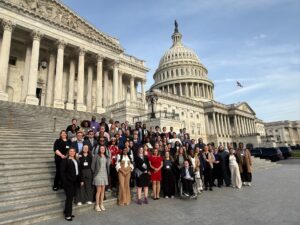
CHEPP and students from SNHU partner Gateway U joined Today’s Students Coalition and learners from across the country in Washington, D.C. for the annual DC Student Summit. After participating in advocacy training, students headed to the Hill for meetings with Congressional leaders to share their stories, making the case for affordable learning, flexible programs, and basic needs support, and how these can help more people stay in school and earn degrees.
These learners brought something essential to Capitol Hill: firsthand knowledge of what today’s learners need to succeed. We’re proud to support these important conversations about the future of higher education.
On The Road with SNHU and CHEPP
Don’t miss these upcoming releases and events from CHEPP and President Ryerson:
- ASU+GSV Summit: April 12-15, 2026
- SNHU Spring Commencement: May 1-3, 2026
- IFC Conference: June 16, 2026
Coming soon. Stay tuned for more details!
- An accessibility playbook from the Coalition on Accessibility in Higher Education. Sign up to receive early access to Accessible by Design: A Comprehensive Playbook for Higher Education, A Practical Guide to Embedding Accessibility Across Digital, Physical, and Institutional Systems for Learners with Disabilities.
- A convening event with the Coalition on Accessibility in Higher Education: The event, Higher Education Accessibility in Action: Partnership and Progress, celebrates the one-year anniversary of the Coalition and the accessibility playbook release. Virtual or in-person two-panel symposium from 2:00-4:00 p.m. ET.
- A new report on how AI is transforming higher education for today’s learners and the institutions that serve them